


[Appearance]
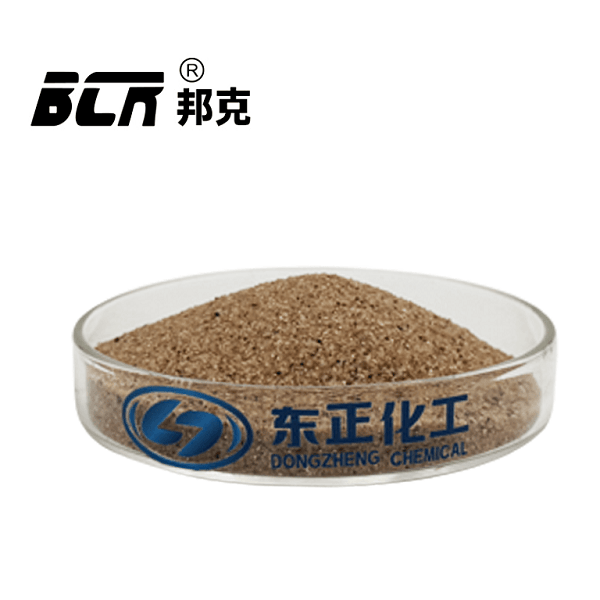
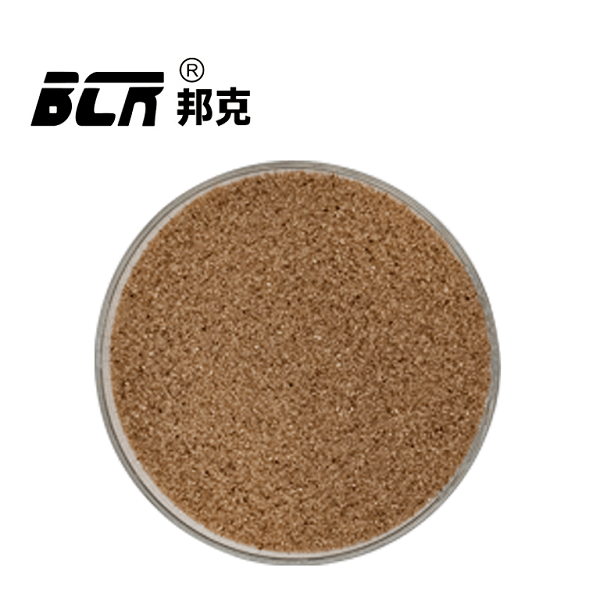
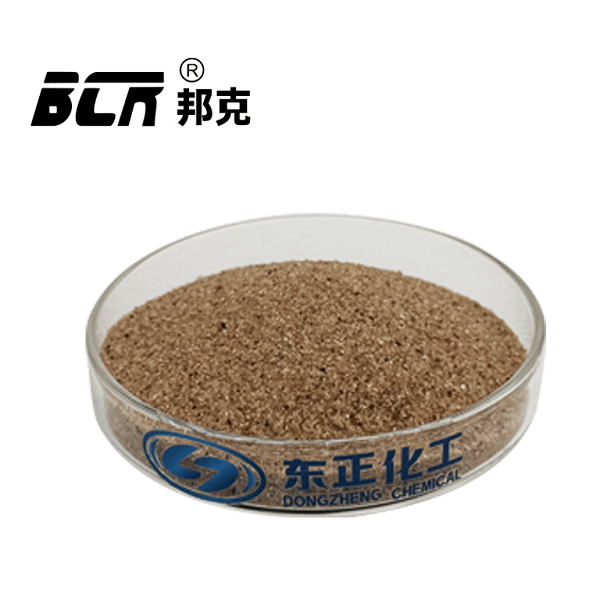
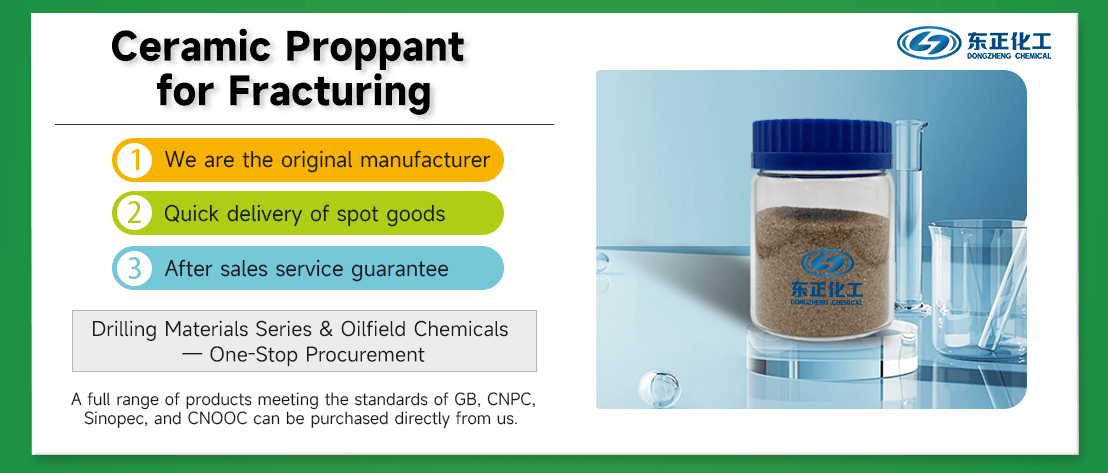
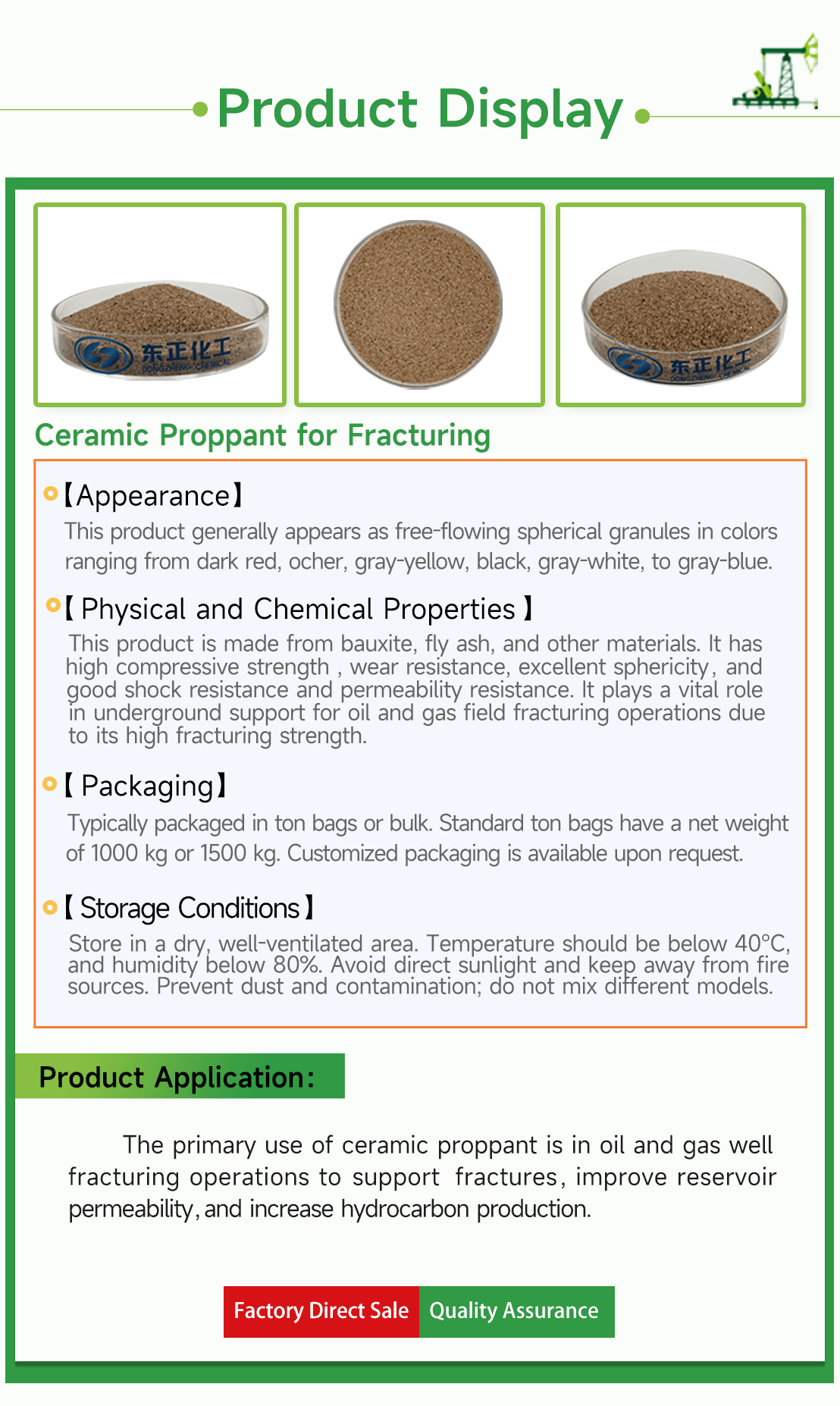
This product generally appears as free-flowing spherical granules in colors ranging from dark red, ocher, gray-yellow, black, gray-white, to gray-blue.
[Physical and Chemical Properties]
This product is made from bauxite, fly ash, and other materials. It has high compressive strength, wear resistance, excellent sphericity, and good shock resistance and permeability resistance. It plays a vital role in underground support for oil and gas field fracturing operations due to its high fracturing strength.
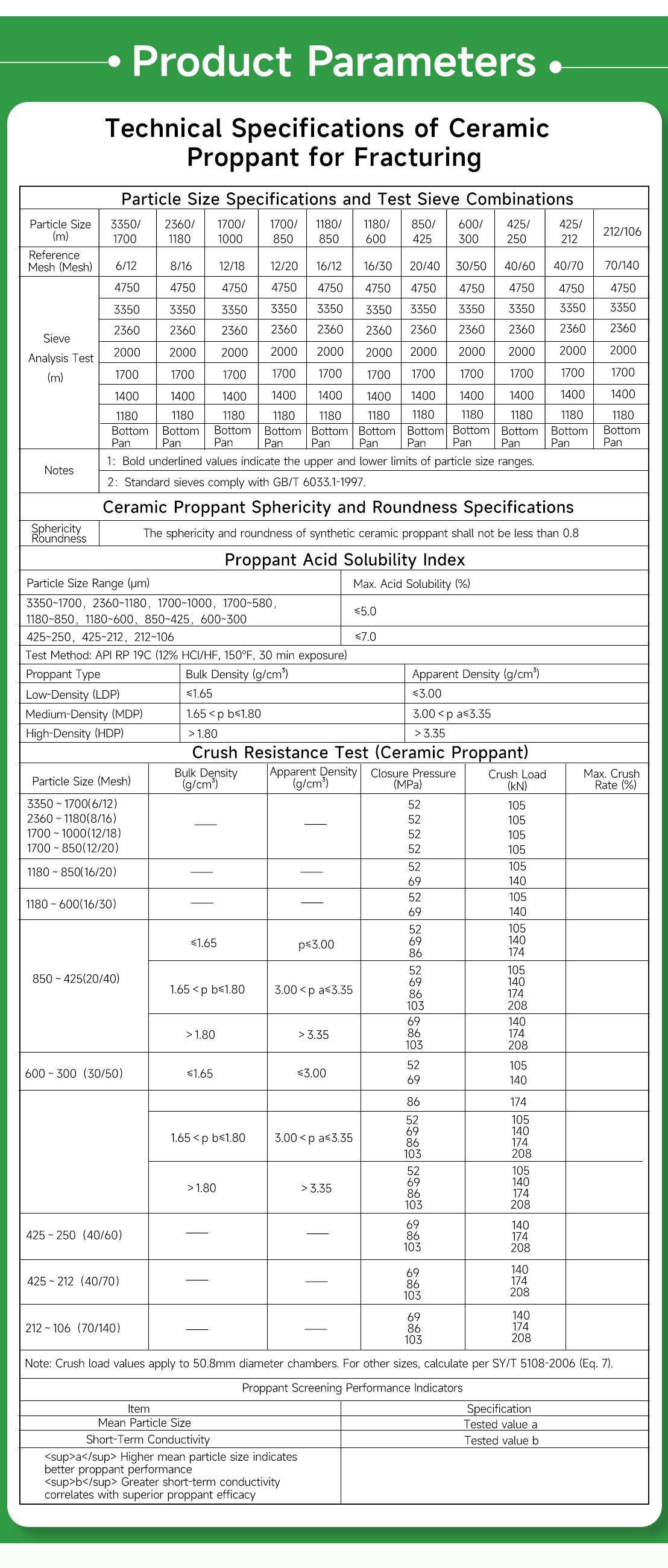
Technical Specifications of Ceramic Proppant for Fracturing
| Particle Size Specifications and Test Sieve Combinations | |||||||||||
| Particle Size (m) | 3350/1700 | 2360/1180 | 1700/1000 | 1700/850 | 1180/850 | 1180/600 | 850/425 | 600/300 | 425/250 | 425/212 | 212/106 |
| Reference Mesh (Mesh) | 6/12 | 8/16 | 12/18 | 12/20 | 16/12 | 16/30 | 20/40 | 30/50 | 40/60 | 40/70 | 70/140 |
Sieve Analysis Test(m) | 4750 | 3350 | 2360 | 2360 | 1700 | 1700 | 1180 | 850 | 600 | 600 | 300 |
| 3350 | 2360 | 2000 | 2000 | 1180 | 1180 | 850 | 600 | 425 | 425 | 212 | |
| 2360 | 2000 | 1700 | 1700 | 1000 | 1000 | 710 | 500 | 355 | 355 | 180 | |
| 2000 | 1700 | 1400 | 1400 | 850 | 850 | 600 | 425 | 300 | 300 | 150 | |
| 1700 | 1400 | 1180 | 1180 | 710 | 710 | 500 | 355 | 250 | 250 | 125 | |
| 1400 | 1180 | 850 | 850 | 600 | 600 | 425 | 300 | 212 | 212 | 106 | |
| 1180 | 850 | 600 | 600 | 425 | 425 | 300 | 212 | 150 | 150 | 75 | |
| Bottom Pan | Bottom Pan | Bottom Pan | Bottom Pan | Bottom Pan | Bottom Pan | Bottom Pan | Bottom Pan | Bottom Pan | Bottom Pan | Bottom Pan | |
Notes | 1. Bold underlined values indicate the upper and lower limits of particle size ranges. | ||||||||||
| 2. Standard sieves comply with GB/T 6033.1-1997. | |||||||||||
| Ceramic Proppant Sphericity and Roundness Specifications | |||||||||||
| Sphericity and Roundness | The sphericity and roundness of synthetic ceramic proppant shall not be less than 0.8 | ||||||||||
| Proppant Acid Solubility Index | |||||||||||
| Particle Size Range (μm) | Max. Acid Solubility (%) | ||||||||||
| 3350~1700,2360~1180,1700~1000,1700~580,1180~850,1180~600,850~425,600~300 | ≤5.0 | ||||||||||
| 425~250,425~212,212~106 | ≤7.0 | ||||||||||
| Proppant Density Index | |||||||||||
| Proppant Type | Bulk Density (g/cm³) | Apparent Density (g/cm³) | |||||||||
| Low-Density (LDP) | ≤1.65 | ≤3.00 | |||||||||
| Medium-Density (MDP) | 1.65<p b≤1.80 | 3.00<p a≤3.35 | |||||||||
| High-Density (HDP) | >1.80 | >3.35 | |||||||||
| Crush Resistance Test (Ceramic Proppant) | |||||||||||
| Particle Size (Mesh) | Bulk Density (g/cm³) | Apparent Density (g/cm³) | Closure Pressure (MPa) | Crush Load (kN) | Max. Crush Rate (%) | ||||||
3350~1700(6/12) 2360~1180(8/16) 1700~1000(12/18) 1700~850(12/20) | -- | -- | 52 5252 52 | 105 105105 105 | |||||||
1180~850(16/20) | -- | -- | 52 69 | 105 140 | |||||||
1180~600(16/30) | -- | -- | 52 69 | 105 140 | |||||||
850~425(20/40) | ≤1.65 | p≤3.00 | 52 | 105 | |||||||
1.65<p b≤1.80 | 3.00<p a≤3.35 | 52 86 103 | 105 140 174 208 | ||||||||
>1.80 | >3.35 | 69 86 103 | 140 174 208 | ||||||||
600~300(30/50) | ≤1.65 | p≤3.00 | 52 | 105 | |||||||
1.65<p b≤1.80 | 3.00<p a≤3.35 | 52 86 103 | 105 140 174 208 | ||||||||
>1.80 | >3.35 | 52 69 86 103 | 105 140 174 208 | ||||||||
425~250(40/60) | -- | -- | 69 86 103 | 140 174 208 | |||||||
425~212(40/70) | -- | -- | 69 86 103 | 140 174 208 | |||||||
212~106(70/140) | -- | -- | 69 86 103 | 140 174 208 | |||||||
| Note: Crush load values apply to 50.8mm diameter chambers. For other sizes, calculate per SY/T 5108-2006 (Eq. 7). | |||||||||||
| Proppant Screening Performance Indicators | |||||||||||
| Item | Specification | ||||||||||
| Mean Particle Size | Tested value a | ||||||||||
| Short-Term Conductivity | Tested value b | ||||||||||
| aHigher mean particle size indicates better proppant performance bGreater short-term conductivity correlates with superior proppant efficacy | |||||||||||
[Application]
The primary use of ceramic proppant is in oil and gas well fracturing operations to support fractures, improve reservoir permeability, and increase hydrocarbon production.
[Product Advantages]
1. High strength and corrosion resistance.
2. Lower density helps reduce formation pressure and damage.
3. Excellent permeability and strong resistance to corrosion.
4. Reduce environmental pollution.
[Usage and Dosage]
Dosage should be calculated based on well depth, formation characteristics, and expected fracture length and width.
[Packaging]
Typically packaged in ton bags or bulk. Standard ton bags have a net weight of 1000 kg or 1500 kg. Customized packaging is available upon request.
[Storage Conditions]
Store in a dry, well-ventilated area. Temperature should be below 40°C, and humidity below 80%. Avoid direct sunlight and keep away from fire sources. Prevent dust and contamination; do not mix different models.
 dzchemgroup@gmail.com
 message