

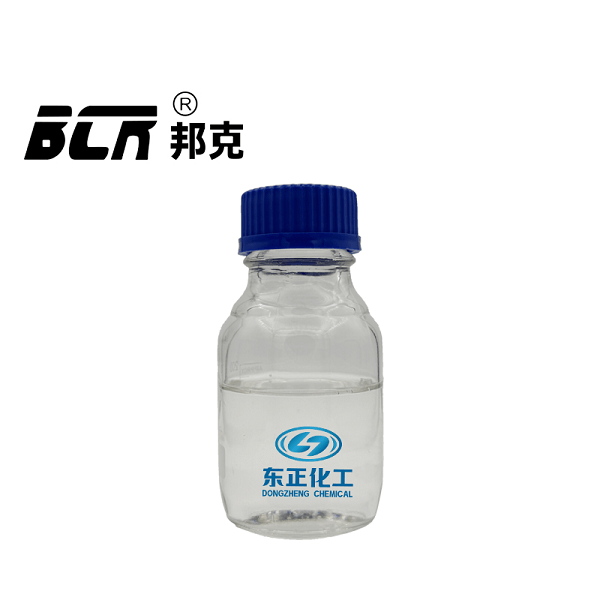

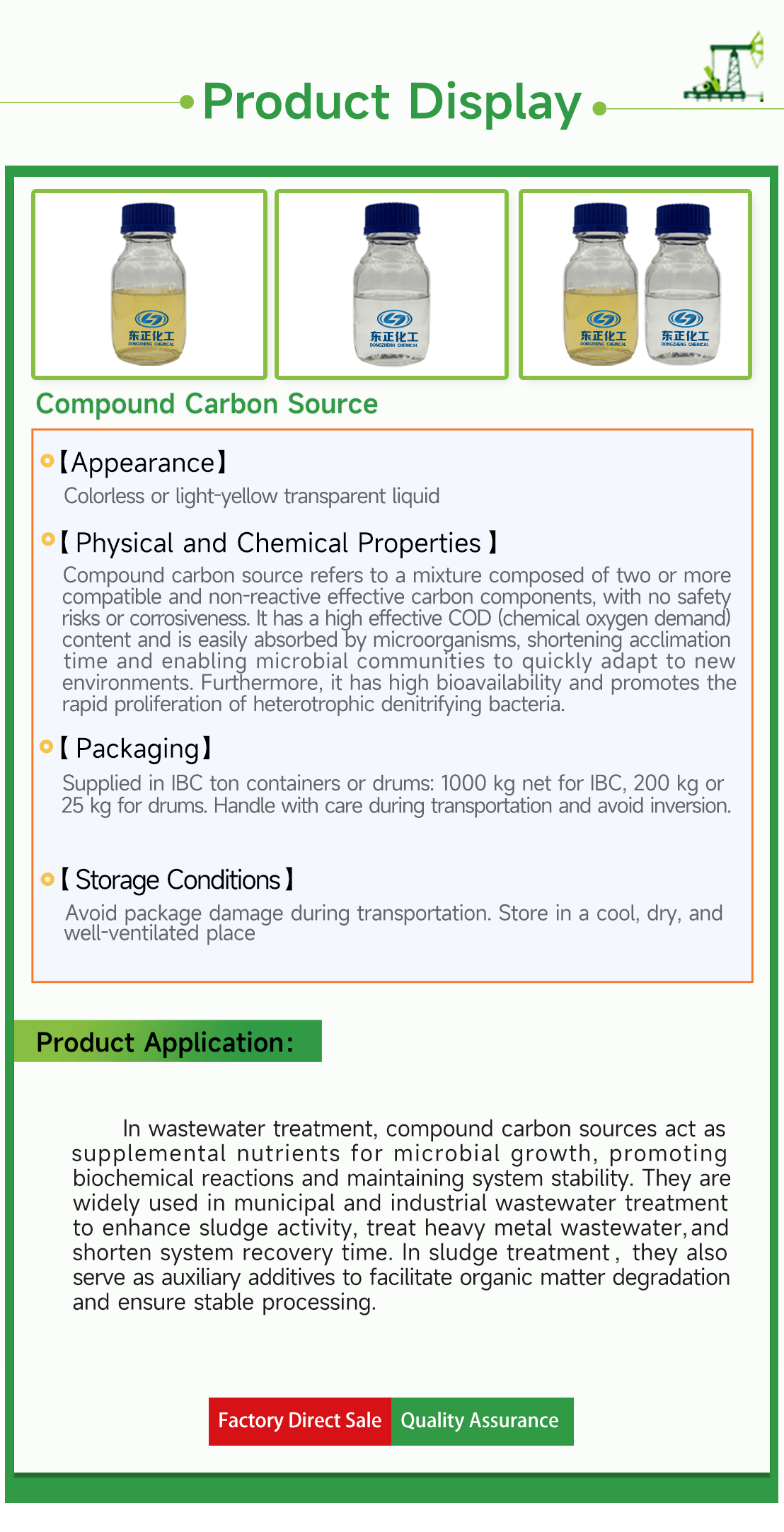

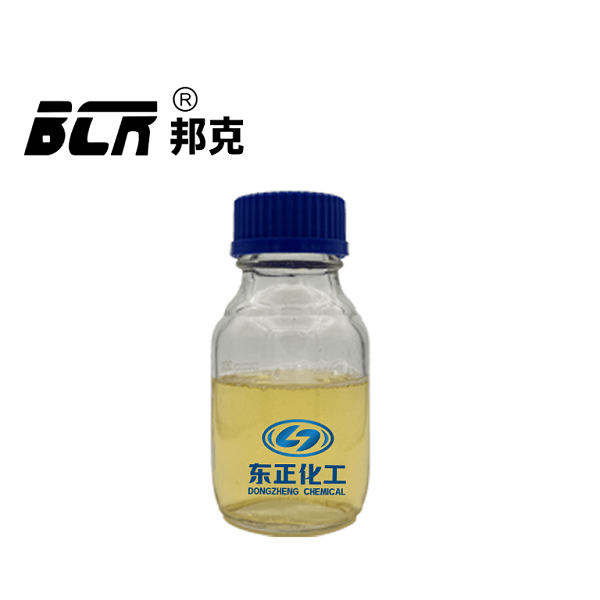
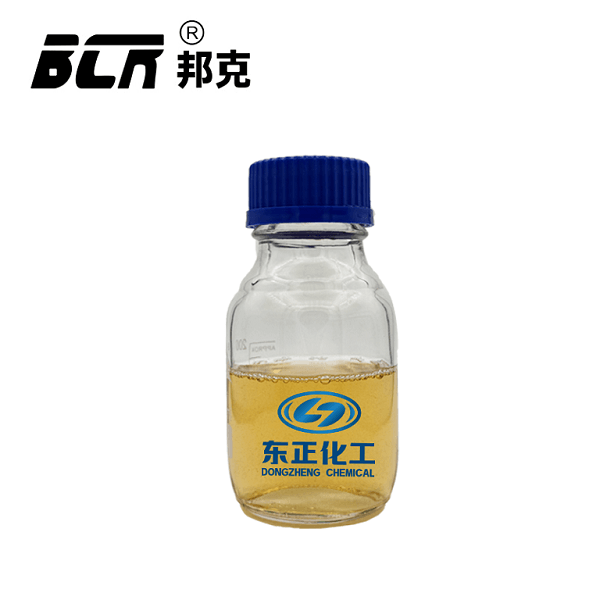
Appearance: Colorless or light-yellow transparent liquid
Physical and Chemical Properties: Compound carbon source refers to a mixture composed of two or more compatible and non-reactive effective carbon components, with no safety risks or corrosiveness. It has a high effective COD (chemical oxygen demand) content and is easily absorbed by microorganisms, shortening acclimation time and enabling microbial communities to quickly adapt to new environments. Furthermore, it has high bioavailability and promotes the rapid proliferation of heterotrophic denitrifying bacteria.
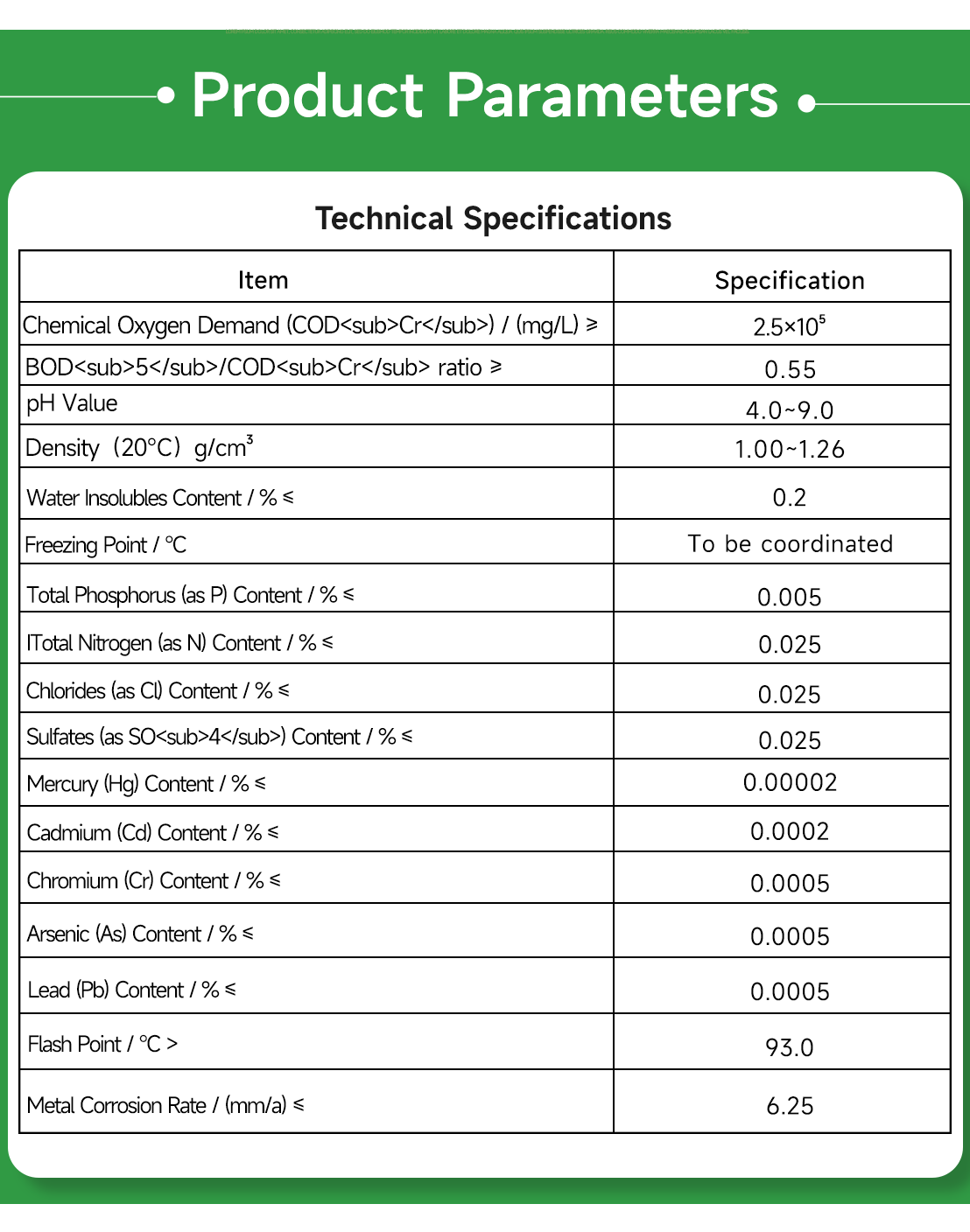
Technical Specifications of Compound Carbon Source
| Item | Specification |
| Chemical Oxygen Demand / (mg/L) ≥ | 2.5×10⁵ |
| BOD5/CODCr ≥ | 0.55 |
| pH Value | 4.0-9.0 |
| Density(20℃)g/cm³ | 1.00-1.26 |
| Water Insolubles Content / % ≤ | 0.2 |
| Freezing Point / °C | To be coordinated |
| Total Phosphorus (as P) Content / % ≤ | 0.005 |
| Total Nitrogen (as N) Content / % ≤ | 0.025 |
| Chlorides (as Cl) Content / % ≤ | 0.025 |
| Sulfates (as SO4) Content / % ≤ | 0.025 |
| Mercury (Hg) Content / % ≤ | 0.00002 |
| Cadmium (Cd) Content / % ≤ | 0.0002 |
| Chromium (Cr) Content / % ≤ | 0.0005 |
| Arsenic (As) Content / % ≤ | 0.0005 |
| Lead (Pb) Content / % ≤ | 0.0005 |
| Flash Point / °C > | 93.0 |
| Metal Corrosion Rate / (mm/a) ≤ | 6.25 |
Applications: In wastewater treatment, compound carbon sources act as supplemental nutrients for microbial growth, promoting biochemical reactions and maintaining system stability. They are widely used in municipal and industrial wastewater treatment to enhance sludge activity, treat heavy metal wastewater, and shorten system recovery time. In sludge treatment, they also serve as auxiliary additives to facilitate organic matter degradation and ensure stable processing.
Product Advantages:
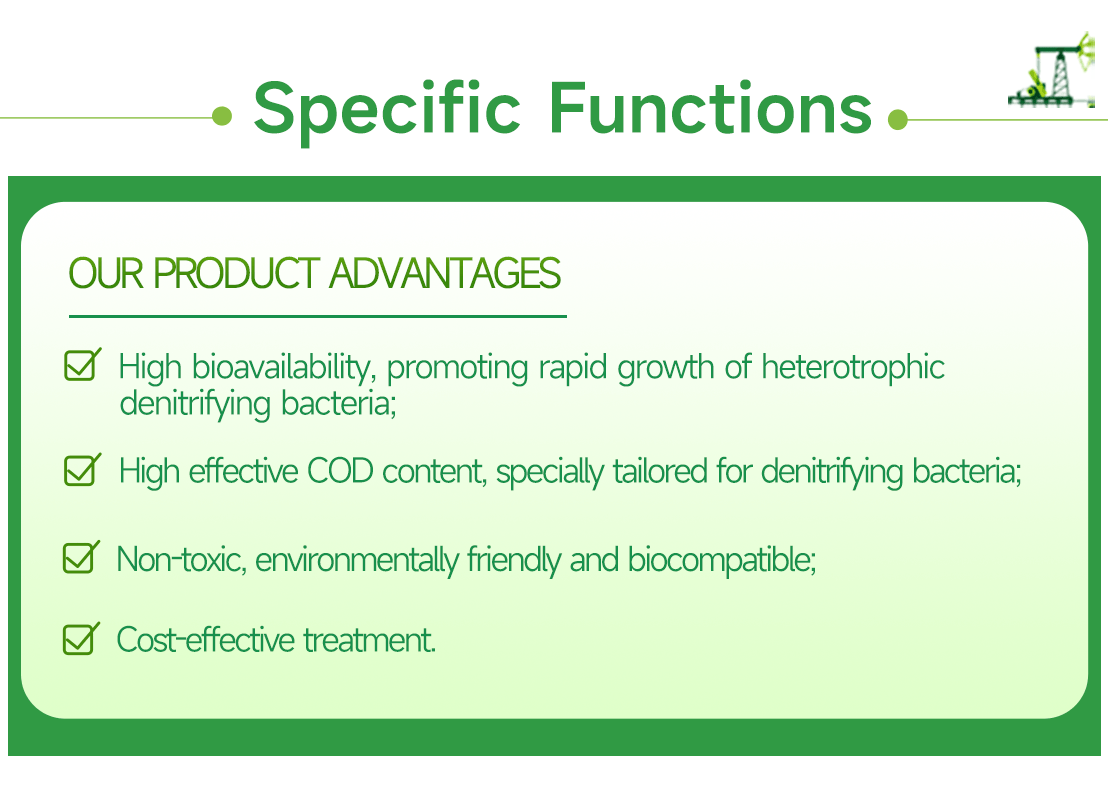
1. High bioavailability, promoting rapid growth of heterotrophic denitrifying bacteria;
2. High effective COD content, specially tailored for denitrifying bacteria;
3. Non-toxic, environmentally friendly and biocompatible;
4. Cost-effective treatment.
Usage and Dosage: Compound carbon sources are typically added at the inlet of anaerobic or anoxic tanks to ensure sufficient utilization during microbial treatment. Recommended dosage for municipal sewage is 0.2–0.5 kg liquid/ton of water; for industrial wastewater, dosage ≥ 0.3 kg/ton of water depending on pollution level.
Packaging: Supplied in IBC ton containers or drums: 1000 kg net for IBC, 200 kg or 25 kg for drums. Handle with care during transportation and avoid inversion.
Storage Conditions: Avoid package damage during transportation. Store in a cool, dry, and well-ventilated place.
 dzchemgroup@gmail.com
 message